

The problem: bike fit tall riders
You choose the largest size in the shop but still sit very low. Or the seatpost extends far above the frame while your arms feel cramped. Being tall does not tell us the separate lengths of your legs, torso and arms. Two riders of equal height can need different positions.
Perhaps you feel excessive weight on your hands. Your knees seem close to your torso, or you repeatedly shift on the saddle. These observations call for a check of the whole position. They do not immediately prove that the frame is too small for you.
Write down what feels difficult on your current bike. Is it getting on safely, room to pedal, or looking ahead for a long time? Consider ride duration and terrain as well. A short circuit outside a shop cannot reveal how your posture changes when you become tired.
Background
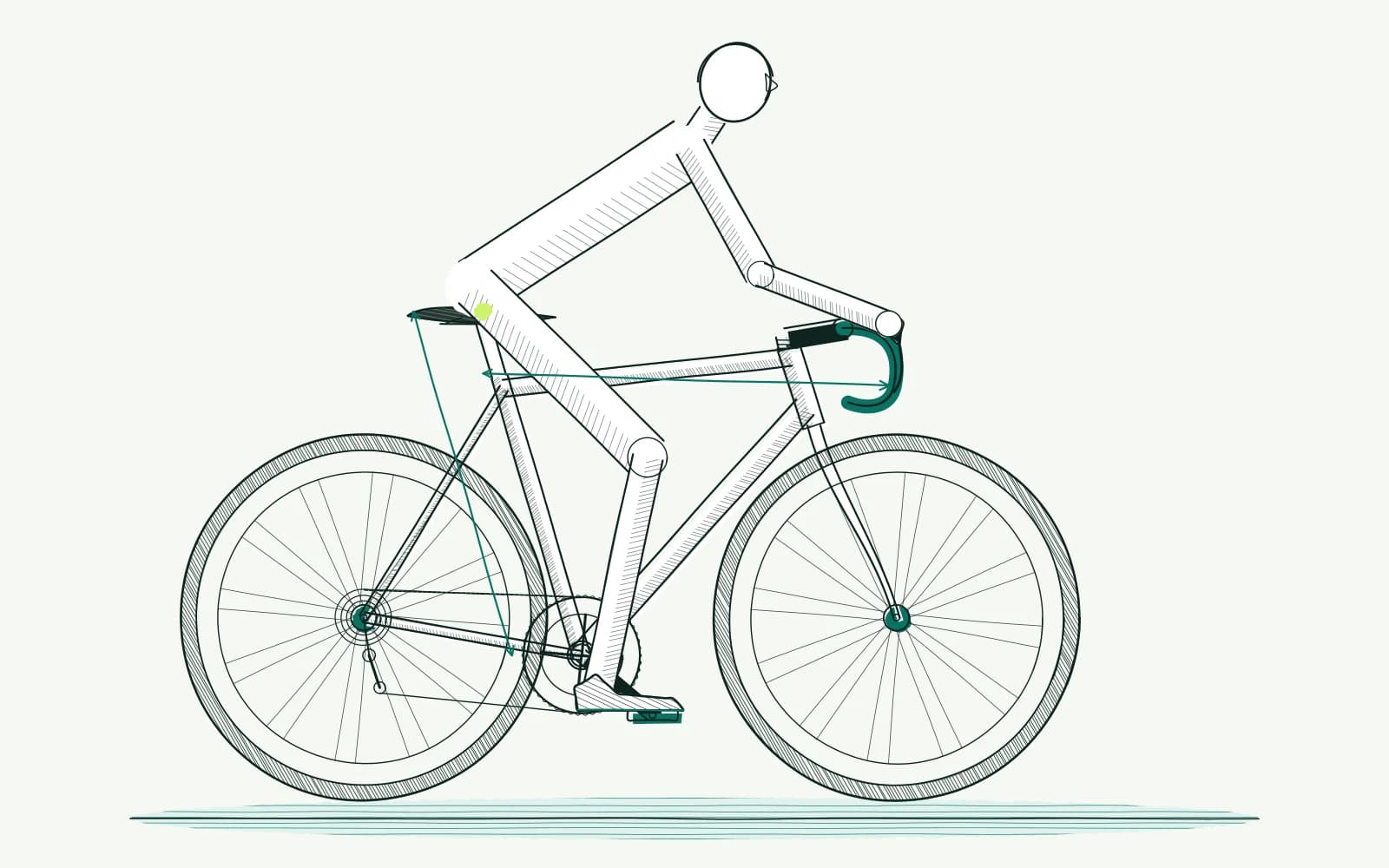
Frame sizes are not identical across brands. The number on a seat tube does not directly describe where your hands will sit. Stack and reach help compare frames. Stack measures vertically from the bottom bracket; reach measures horizontally to the top of the head tube.
Your final handlebar position also depends on spacers, stem and bar shape. A frame with more stack may make your preferred bar height easier to achieve. More length is not automatically better. You must reach the bars comfortably while retaining control during braking and slow manoeuvres.
Long legs can require a high saddle without implying a long torso. The height difference to the bars then becomes important. A low frame with considerable exposed seatpost can produce substantial drop. Sometimes the answer lies in frame geometry rather than adding still more stem length.
Safe installation limits constrain every adjustment. Minimum seatpost insertion and maximum permitted spacer height are not optional markings. Follow the instructions for your particular components. An online calculator cannot identify every frame, fork and combination installed on your bicycle, or establish their mechanical compatibility.
Crank length does not follow automatically from height either. Longer cranks change movement around the top of the pedal stroke. Do not choose them solely because you are tall. Assess your existing movement space first, and discuss substantial changes with a fitter if their effects are unclear.
How to approach it
-
Measure height and inseam again. Use a level floor, a wall and a firm book. Work without shoes and hold the book between your legs as a saddle would sit.
Ask someone to help read the measurement. Repeat it and investigate substantial differences before treating an online result as your starting point.
-
Check installation limits. Find the seatpost minimum-insertion mark and the instructions for your fork and stem. Record how much safe adjustment remains.
A missing manual is not a reason to move a component further. Ask the manufacturer or a mechanic for the correct limit for your exact combination.
-
Record your position with a tape measure. Note saddle height from the bottom bracket, saddle setback and the height difference to the bars. Take a side photograph with your hands in their normal position too. This helps separate a problem around the legs from one involving the distance to the controls.
Have someone hold the bike securely while you sit on it. Turn the pedals slowly and steer gently to both sides. Check whether your knees touch the bars. Record where this happens before replacing components.
-
Choose a small, reversible trial. If your pelvis visibly rocks, lowering the saddle by 3 mm can be a practical experiment. This is not an established ideal increment for every tall rider.
Do not change the bars simultaneously. Ask a fitter for help if you cannot determine why the pelvis moves.
-
Compare two or three easy rides in similar conditions. Record support, access to the brakes and any pain. Restore the previous setting if things worsen.
If the bars remain reachable only with components at their limits, compare alternative geometry before buying more parts. Keep each trial separate so the result remains useful.
-
Treat the frame-size calculator as a starting point, not a purchase guarantee. Compare its result with real stack and reach dimensions. Stop for sharp pain or radiating tingling.
Seek medical advice for pain at rest, night pain or swelling. Have persistent symptoms assessed after three or four careful adjustments; height does not explain every complaint.
Further reading
Handlebar drop: find your bar height helps when a high saddle creates a difficult height difference to the bars.
Foot measurement cycling: length and width approaches shoe choice through actual foot dimensions, without assumptions based on body height.
Bike fit riding styles compares the demands of different rides and hand positions before you choose a frame.
The frame-size calculator provides a starting point to compare with the geometry of your current bike rather than replacing that comparison.
Frequently asked questions
Do tall riders always need the largest frame size?
Not automatically. Leg length, torso, arms and preferred posture together determine which geometry is useful. The largest size may provide enough height but too much length. Compare stack, reach and the available safe adjustment, rather than relying exclusively on the size printed on the frame.
Can a longer stem solve a small frame?
A different stem changes hand position, not the entire frame geometry. You must still achieve a suitable height and retain control. An extreme component is not an automatic solution. First establish whether the frame can reach the required contact points through ordinary, permitted adjustments.
Is considerable exposed seatpost a problem?
Not necessarily: frames and seatposts differ in design. Minimum insertion and manufacturer instructions determine safe installation. Also check whether handlebar height remains appropriate for that saddle position. Consider both the mechanical limit and comfort on an actual ride, rather than judging the bike by appearance alone.
Should I fit longer cranks because I am tall?
Height alone does not establish that. Cranks affect hip and knee movement throughout the pedal revolution. A change deserves separate assessment. Avoid combining it with a saddle-height or handlebar-distance trial, because simultaneous adjustments make it difficult to identify which one produced a particular effect.
This guide covers one part of your riding position. Read how bike fitting connects your measurements and bike setup.
Compare your measurements with a useful starting point for frame size.
Calculate my frame size