

The problem: lower back pain cycling
Your back feels uncomfortable when you spend longer on the hoods. Perhaps you keep shifting on the saddle or sitting upright. You want to know whether the distance to the bars is right. At the same time, you cannot tell whether the bike explains everything.
Start with the circumstances. Is the feeling in the middle of your lower back or more to one side? Does it appear during easy riding, climbing or a low position? Also record whether it disappears after dismounting or remains present.
A new bike, longer ride or changed bar position provides a clear comparison point. Sometimes nothing on the bike has changed. Write that down too, without choosing your own explanation. Your notes help a fitter or clinician ask more focused questions.
You do not need to provoke the symptom again for a useful description. Use what you have already observed on previous rides.
Background: assess seating and reach together
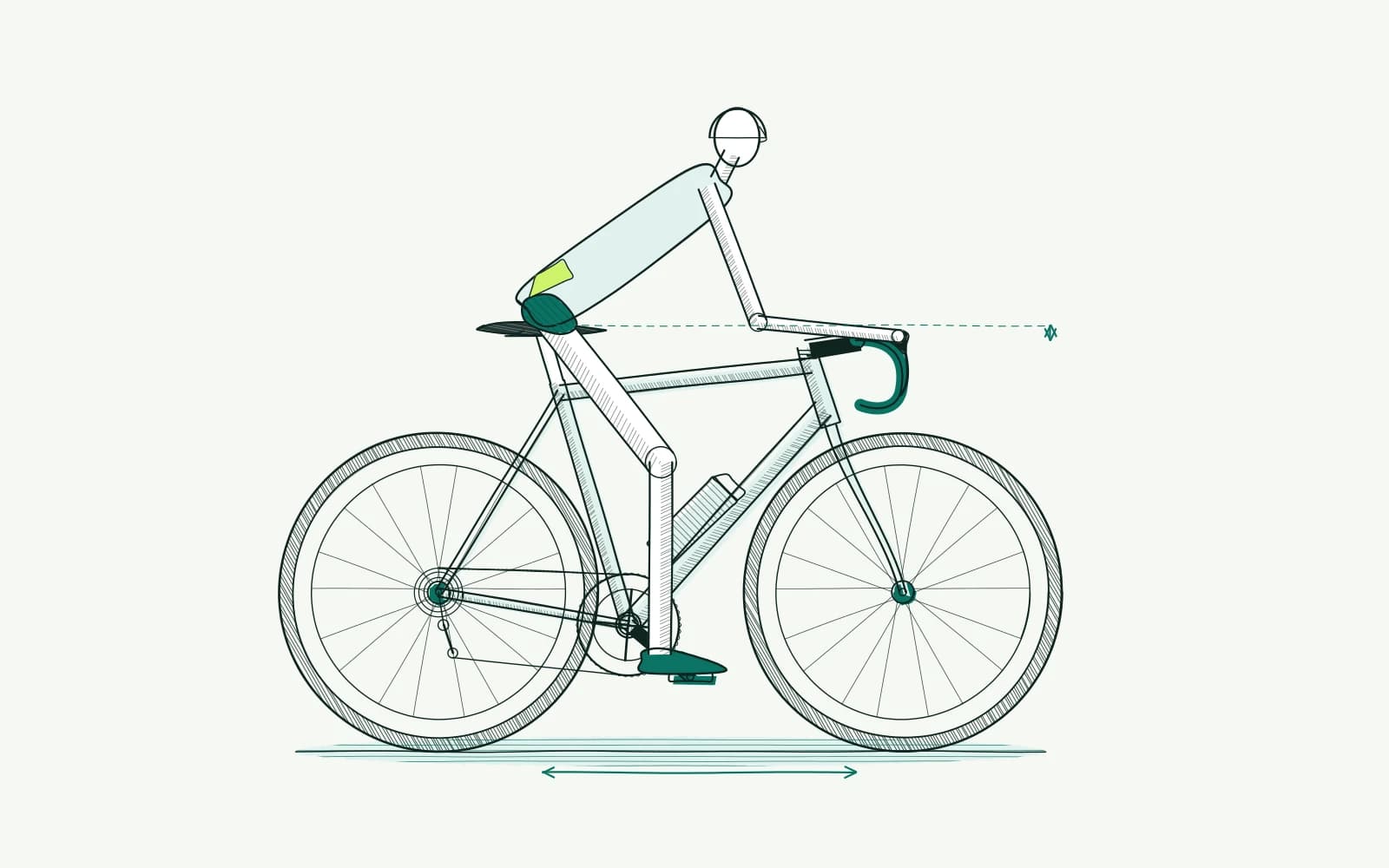
Your hands, saddle and pedals determine where you find support. Changing a contact point also changes the position between those points. More distant bars require greater reach from your seat. A larger height difference can change the position of your torso.
That makes a handlebar measurement relevant, but does not establish a cause of back pain. Two riders can experience identical measurements very differently. The same person can also experience a position differently during a longer or harder ride. A measurement describes your bike; it does not provide a diagnosis.
First consider whether your seating remains stable. If you keep sliding forwards, you are not always measuring from the same position. Moving the saddle forwards shortens reach, but also changes your position relative to the pedals. That makes the influence of the bars harder to assess separately.
A side photograph can help you recover your starting position. It does not show how you move throughout an entire ride. Nor can a back shape tell you why someone has pain. A fitter can assess movement alongside the bike; medical questions belong with a clinician.
Include the course of your rides too. A changed training week, unusual effort or prolonged use of one hand position may matter for comparison. You do not need to label any of those as a separate cause. Aim for an honest overview before identifying a component as the solution.
How to approach it with bike fitting
-
Make a short symptom record.
Note location, starting point, hand position and ride type. Include what happened after you stopped. Use existing observations; do not continue riding to make a symptom measurable. For pain at rest or other warning signs, skip the self-test and seek medical assessment.
-
Record the starting setup.
Place the bike level and use a tape measure and spirit level. Note saddle height, saddle position, bar height difference and distance to the hood. Name the reference points and take a side photograph. Check for shifted or loose components too; resolve uncertain installation before riding.
-
Look at seating before changing reach.
Can you remain in the same place without sliding forwards? Ask a fitter to observe if that is unclear. Use the bike fit calculator to organise your measurements. A difference from its calculation does not prove that measurement causes your back symptoms.
-
Choose one small, focused comparison.
If bar height difference seems particularly difficult to use, discuss a permitted increase. A 2–5 mm step can be a cautious comparison example. It is not a prescribed treatment, and not every system allows that step. Respect manufacturer limits, cable clearance and torque settings; have a mechanic check installation.
-
Compare without collecting pain.
Leave the saddle, shoes and other bar settings unchanged. First check braking and steering in a safe place. Then try two to three easy rides while you remain symptom-free. Keep route and effort comparable, and record whether the position becomes easier to use.
-
Return or seek help.
Stop for new or increasing pain and restore the recorded safe starting setup, with help if necessary. Feeling better while stationary is insufficient reason to ride through symptoms. Have pain persisting after three to four careful adjustments assessed by a fitter and a clinician where appropriate.
Pain at rest, night pain, swelling and radiating tingling need earlier medical assessment. Do not wait for another adjustment attempt. New loss of sensation also means stopping the comparison and seeking assessment. You do not first need to prove that the bike caused the symptom.
New loss of sensation around your groin or loss of bladder or bowel control needs immediate emergency assessment. Back pain with pain, tingling, weakness or numbness in both legs also needs emergency help. See the medical warning signs for back pain; do not wait for a bike fitting appointment.
Further reading
- Bike fit limited flexibility helps you assess usable movement without forcing yourself into a lower riding position.
- Endurance bike fit: comfort over distance explains how to compare duration and position separately during easy rides.
- Numb toes cycling: pressure and shoe fit helps you describe accompanying foot symptoms separately instead of attributing everything to your back.
- The bike fit calculator brings your body measurements together for a check of your current riding position.
Frequently asked questions
Do more comfortable higher bars mean I found the cause?
No, you have a useful observation about that position. It can inform the next assessment, but does not fully explain the symptom. Record when things feel better and what stayed the same. Share that information with a fitter or clinician if symptoms return or persist over time.
Can I use an old bike for comparison?
Yes, when it remains safe and comfortable to use. Measure the same contact points on both bikes. Record differences in saddle shape and brake hoods too, because equal distances can feel different. Use the comparison to ask focused questions, without automatically copying every measurement to the other bike.
Should I send a photograph of my back to a fitter?
A side photograph can clarify the bike build and your starting posture. Ask the fitter which image would help. A photograph cannot replace discussing symptoms or observing movement. Avoid drawing your own medical conclusion from a curved or straight back captured at one particular moment in the image.
What should I take to an appointment?
Bring your usual cycling shoes, measurement notes and a brief record of previous changes. Describe your rides and times without symptoms too. Mention symptoms outside cycling and any medical assessment. This helps avoid starting the appointment by guessing which settings you have already tried on your own.
This guide covers one part of your riding position. Read how bike fitting connects your measurements and bike setup.
Organise your current bike measurements with the calculator to prepare a focused check of your position.
Calculate your bike fit