

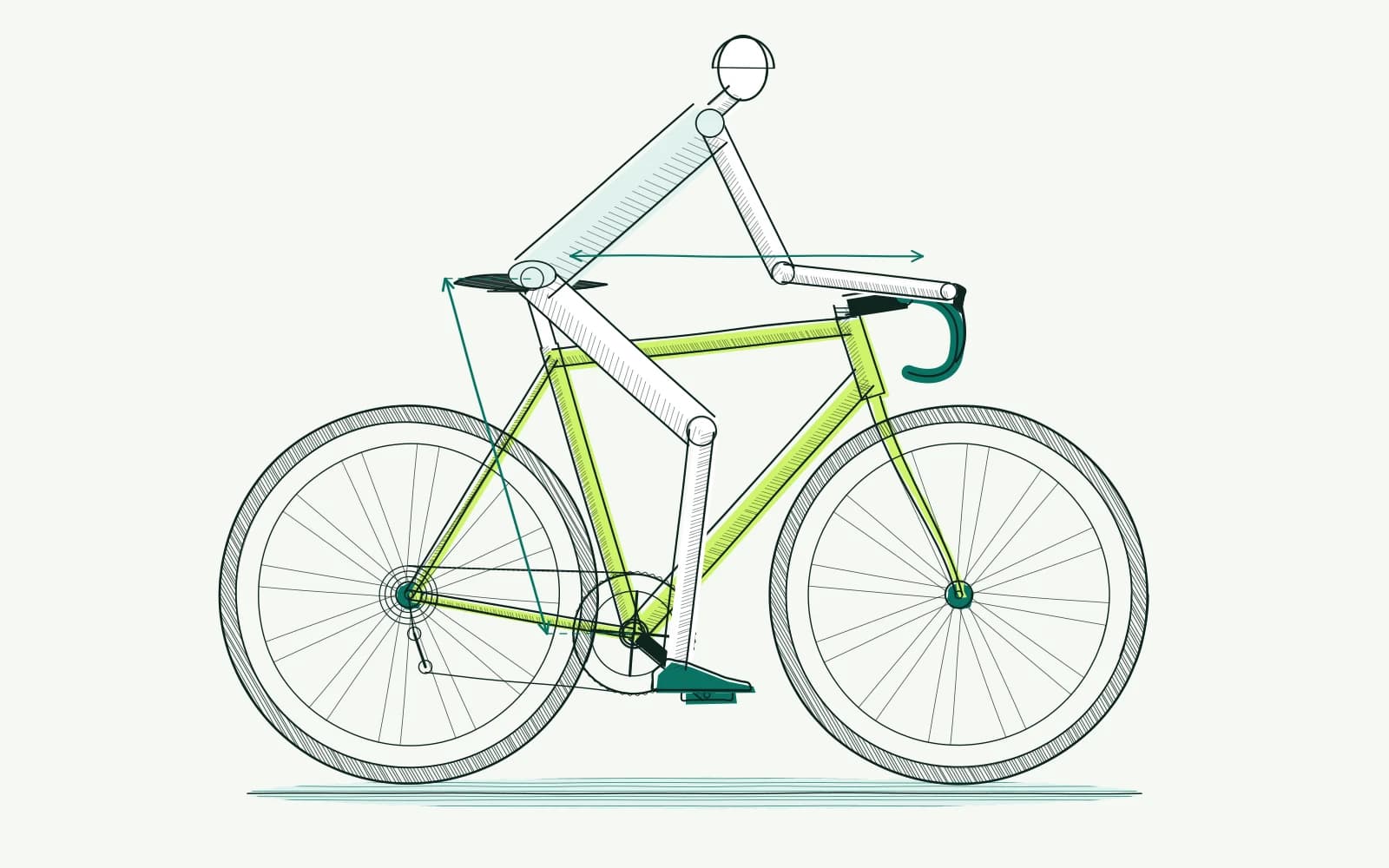
The problem: bike fit for beginners
You have bought a bike, borrowed one or taken your old bike out of storage. The first kilometres feel unfamiliar. You slide on the saddle, keep changing hand position or hold your arms rigidly. A short test ride may have felt fine, while the same position becomes uncomfortable on a longer outing.
That makes starting confusing. You do not yet know what belongs to ordinary effort and what concerns the setup. Returning riders can feel uncertain too. An old position does not automatically feel comfortable after a lengthy break.
You do not need to replace components immediately or copy an experienced rider's posture. Start by asking whether you can pedal, look ahead, steer and brake comfortably.
This guide helps organise those first checks. Pain, tingling and lost sensation are not compulsory stages of getting used to cycling. Record when a problem starts rather than changing everything because of a vague impression.
Background: getting used to a bike is not the same as fitting it
Your position sits between the saddle, pedals and handlebar. Moving the saddle therefore changes more than its height alone. The distance to your hands may feel different too. One uncomfortable contact point does not immediately prove that one particular measurement is wrong.
A borrowed bike still carries someone else's setup. On an old bike of your own, clothing, shoes and intended use may have changed. Perhaps you now prefer relaxed outings to fast group rides. Start with that present purpose rather than an old photograph.
Frame size limits what you can adjust. Components also have their own installation limits. The Trek owner's manual, for example, warns that enough seatpost must remain inside the frame. A marking is not permission to move beyond it to reach a calculated ideal measurement.
The ride itself also matters when assessing a position. A short, easy circuit is a different comparison from a demanding outing.
If you ride further while adjusting components, it becomes harder to understand which change relates to your experience. Keep the first comparisons straightforward. You do not need a power meter to record your route, duration and impressions.
Online tools can organise measurements and calculate an initial proposal. They cannot observe your braking or movement when you become tired.
They do not investigate pain either. Ask a mechanic about uncertain installation and a fitter about persistent positioning difficulties. Medical symptoms belong with a clinician. These boundaries do not make a basic starting measurement less useful; they make its meaning clearer.
How to approach it with bike fitting
-
Make the bike safe first: Check tyres, brakes and component security according to the manufacturer's instructions. Do not use a ride to discover whether a loose handlebar will stay attached. Ask a mechanic if installation is uncertain. Check that you can operate the brakes from your normal hand position without sliding forwards on the saddle.
-
Keep the starting position: Stand the bike upright on a level floor. Use a tape measure for saddle height.
Measure from the centre of the bottom bracket to a consistent point on the saddle. Record that point and the measurement in millimetres. Take a side photograph and record saddle and handlebar positions so you can recover the original setup later.
-
Calculate an initial comparison: Measure your body using the instructions in the bike fit calculator. Check the units and repeat any uncertain measurement. Treat the result as a proposal rather than a compulsory final position. A large difference from your current setup calls for checking the inputs and measurement method before making a change.
-
Choose one understandable adjustment: Work only on a component that you know how to adjust safely. Record the old and new measurements, including the direction. No fixed millimetre step suits every beginner and every component.
Remain within manufacturer limits and use the specified tools. Let a professional adjust an unfamiliar handlebar or saddle assembly instead.
-
Compare two to three easy rides: Use a familiar route and similar effort while you remain symptom-free. Record whether pedalling, braking and looking ahead become easier. Note new pressure points too; a better saddle sensation is not the whole result.
Return to the recorded safe position if things worsen. Do not finish a testing series at the expense of pain.
-
Recognise the limit of self-testing: Stop for lost sensation, radiating tingling or symptoms that reduce your control of the bike. Seek medical assessment for pain at rest or at night, swelling or persistent symptoms. If pain remains after three to four careful adjustments, consult a fitter and, where appropriate, a clinician. A new bike is never a reason to ignore warning signs while trying to settle into cycling.
Further reading
- Bike fit and body proportions explains why a friend of the same height does not provide a reliable personal starting position.
- Bike frame size helps check whether the bike offers enough adjustment room for your riding position.
- Saddle height expands the first saddle measurement before you start changing other contact points.
- Handlebar width and hood position helps assess safe hand contact without immediately buying a different handlebar.
- Cycling power and pacing helps keep effort during comparison rides deliberate and straightforward to record.
- The bike fit calculator gathers your body measurements and offers an initial proposal to assess on the bike.
Frequently asked questions
Do I need special cycling shoes for my first setup?
No. Record the shoes and pedals you currently use and compare your first rides with those.
Different shoes can change the starting conditions. Recheck your position when you switch rather than changing shoes, saddle and handlebar together. You do not need a complete new equipment collection to investigate one unclear discomfort.
Can I use my old saddle position when returning to cycling?
You can record it as a starting point if the installation is safe. It does not prove that the same position still suits your current rides. Start gently and check brake access, pedalling and comfort again. Change something only when you have a clear reason and a safe way to compare it.
Should I always reach the ground with both feet flat?
Do not use that as the only measure of saddle height. The bike type and how you mount and dismount also matter. Ask for help if stopping feels uncertain. You need to stop and get off safely, but saddle position must also be assessed while you pedal.
Is a free calculation enough before I attempt longer rides?
A calculation is a beginning, not a declaration that everything is correct. Check the proposal during easy rides and build experience with your own bike. Ask for help if the position remains uncertain or symptoms develop. A longer riding goal makes addressing problems early especially worthwhile, rather than something to postpone.
This guide covers one part of your riding position. Read how bike fitting connects your measurements and bike setup.
Start with your own measurements and check the proposal during an easy ride.
Calculate your bike fit