

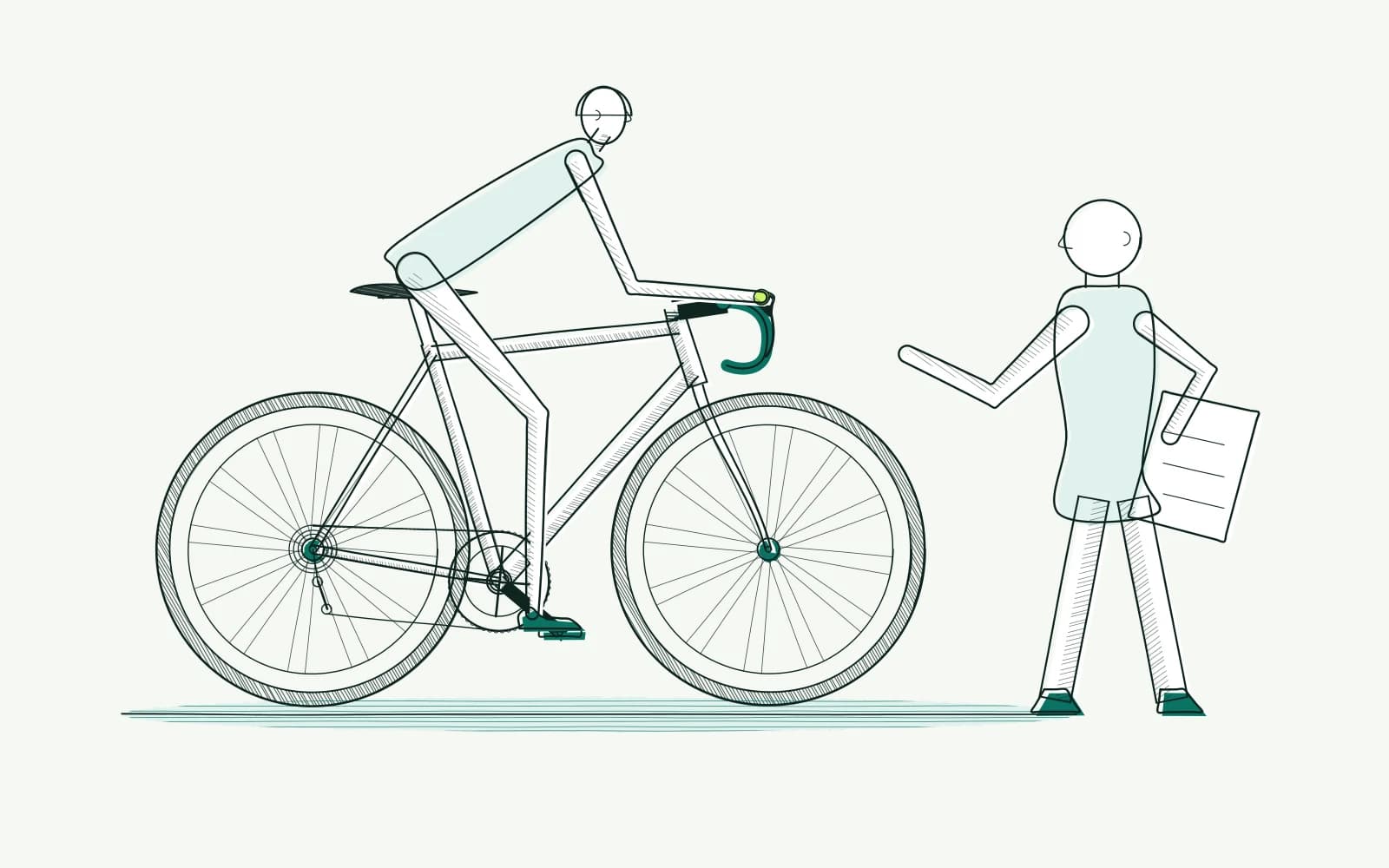
The problem: recognising online bike fit limitations
You entered measurements and received a recommendation. Yet the position remains uncomfortable, or symptoms repeatedly move elsewhere. Perhaps different tools produce different results. You wonder whether to try another change yourself or arrange an appointment.
That is a useful question, not a failure of preparation.
You can become stuck without pain too. A measurement is uncertain, a new bike has little adjustment room or you cannot change position safely. Another calculation may then add little. You need information the screen cannot observe.
Start by identifying what is uncertain. Is it a measurement, movement, component or physical symptom? Those questions do not always need the same specialist. This guide helps identify suitable help and useful information to gather beforehand.
The aim is a focused assessment, not trying as many adjustments as possible before you are allowed to ask for help.
Background: what online information cannot show
An online tool works with the inputs you provide. It can organise measurements and suggest a starting point. It cannot see whether the tape was misplaced or whether you move differently while riding. A precisely displayed recommendation may therefore still be uncertain.
A photograph or video adds information but has limits too. Camera angle, perspective and the selected moment change what is visible. Pressure beneath a hand or saddle is not measured directly. Sensation, fatigue and changes later in a ride also need your description.
Never send only a number when the problem concerns experience.
A fitter can assess the complete position and movement, then compare changes with supervision. That does not mean every fitter can answer every medical question. Ask about methods, experience and the service's limits beforehand. Health symptoms may require cooperation with an appropriately qualified clinician.
A mechanic has another role. Safety, wear, compatibility and installation belong to technical inspection. An unsafe brake hood or incorrectly fitted cleat needs correction first. Testing a position cannot make a mechanical defect acceptable.
Choosing help does not need to become a contest between online and personal assessment. Online information can prepare you better for an appointment. Bring assumptions and uncertainties, rather than only a desired final value. That lets the assessment begin with your actual question.
A well-recorded starting position remains useful even if a different approach ultimately becomes necessary. Keep the record available for any follow-up discussion too.
How to approach it with bike fitting
-
Classify your question: Write whether you want a starting dimension, a bike comparison or an explanation for symptoms. Record what you have tried and what changed afterwards. Distinguish physical signals from mechanical problems.
Stop with an unsafe bike or symptoms needing assessment; collecting more input values is not the first priority in those situations.
-
Collect a checkable baseline: Record body measurements, bike model, size and fitted components. Measure current settings using fixed reference points and record millimetres and degrees. Add clear photographs without drawing personal medical conclusions.
State when a measurement is uncertain. An honestly uncertain value is more useful than an apparently precise number that cannot be repeated.
-
Use online information for a defined question: The bike fit calculator can help organise a starting position. Keep entered values and the result together. Do not keep searching for another calculator until one confirms your preferred answer.
Seek help when conflicting recommendations cannot be compared safely and reliably on your own bike.
-
Choose the appropriate specialist: Discuss installation and compatibility with a mechanic, movement and position with a fitter. Seek medical assessment for physical warning signs or symptoms that remain away from cycling.
Explain your aim and limitations when arranging the appointment. Ask what the assessment includes and whether a follow-up may be needed afterwards.
-
Make supervised follow-up concrete: Record which setting changes, its direction and the number of millimetres or degrees. Keep the original position and conditions for reverting. Only where appropriate, compare two to three easy rides per change.
Record improvements and new problems alike. Stop if things worsen; an appointment or plan never obliges you to tolerate pain.
-
Recognise reasons to act earlier: Pain at rest or at night, swelling, radiating tingling and lost sensation need medical assessment. Seek immediate help for suddenly severe symptoms or becoming seriously unwell. Do not wait for a scheduled fitting appointment.
If ordinary position-related pain persists after three to four careful adjustments, consult a fitter and, where appropriate, a clinician. You do not need to reach that number before asking for help.
Further reading
- Bike fitting science helps separate assumptions, measurements and experiences when different recommendations appear to contradict each other.
- Cycling shoe and cleat fit discusses why shoe fit, installation and physical symptoms require different checks.
- Cycling sweat rate shows why a number measured at home does not automatically become an individual prescription.
- Numb hands cycling: where should you start? helps describe signals that should not be continually suppressed through adjustments.
- The bike fit calculator can collect your starting information for a better-prepared discussion.
Frequently asked questions
Is online fitting pointless if I later visit a fitter?
No. Measurements and notes can prepare you better for an appointment. Keep the method and uncertainties too. The online result is information for discussion, not an outcome the fitter must confirm.
That leaves room to reassess your actual question carefully rather than simply defending an earlier calculated value.
Must I try every possible adjustment first?
No. You do not need to complete a series of experiments before asking for help. Unsafe installation, lost sensation or other warning signs are reasons to stop earlier. Even without those signs, guidance can be sensible when you do not understand the measurement or cannot safely reverse a change.
How should I prepare practically for an appointment?
Bring bike details, shoes, relevant components and measurement notes as agreed with the provider. Describe where and when the problem occurs, plus what you already changed. Mention symptoms away from cycling. Ask beforehand what to bring so the assessment can address your actual situation rather than an incomplete description.
Can a fitter establish which medical condition I have?
That depends on their clinical qualifications and the nature of the assessment. Bike fitting itself is not a medical diagnosis. Seek appropriate medical assessment for health symptoms. Do not treat an explanation about saddle height or reach as a replacement for investigating persistent or concerning physical symptoms.
This guide covers one part of your riding position. Read how bike fitting connects your measurements and bike setup.
Organise your starting information and bring uncertainties when seeking guidance.
Calculate your bike fit